
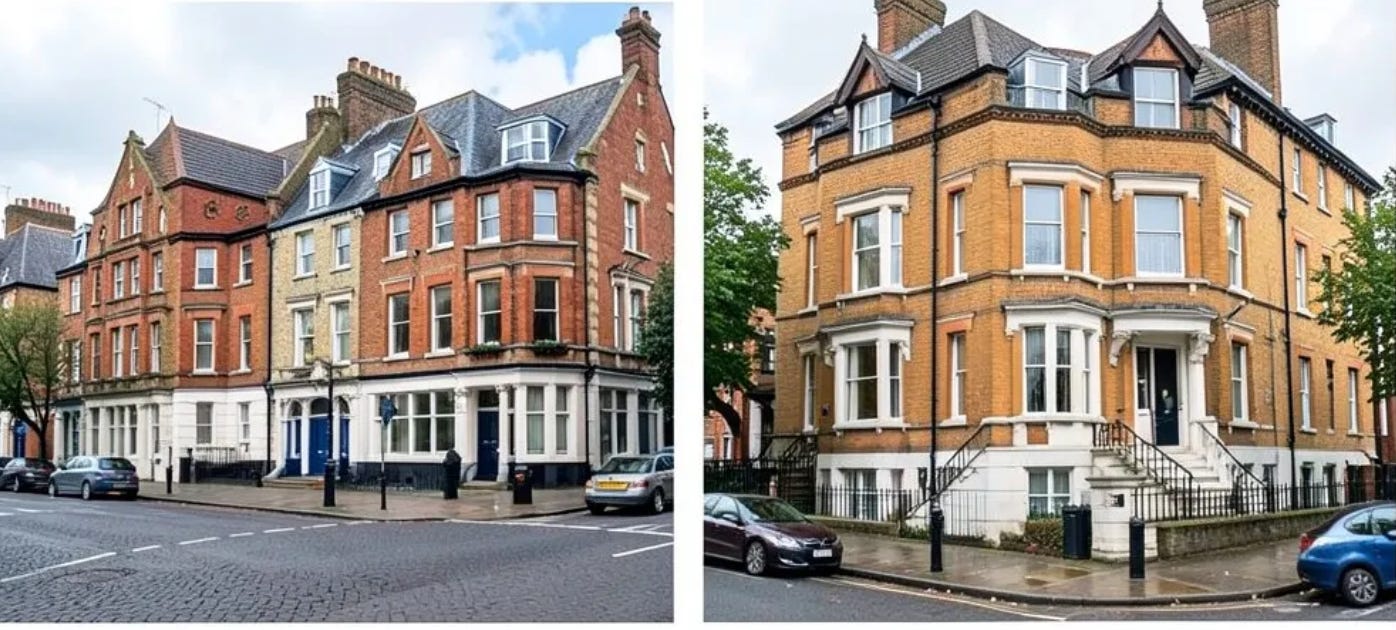
The London property market isn’t moving in one direction
If I told you London property prices were falling, would you see that as an opportunity to buy — or a reason to wait?
The answer might depend on whether you’re looking at a flat or a house.
According to the latest official figures, London flat prices have fallen 5% over the past year. Meanwhile, semi-detached and detached houses have increased in value. That’s a pretty significant difference within the same city.
And for first-time buyers, who are often looking at flats rather than houses, it’s worth understanding why.
Why might flats be underperforming?
Affordability and buyer demand: First-time buyers are particularly sensitive to borrowing costs and deposit requirements.
Building-related costs: Service charges, maintenance liabilities and insurance can affect the attractiveness of flats.
Leasehold and financing: Lease terms, building safety documentation and lender requirements can reduce the potential buyer pool for particular properties.
Lifestyle and space: Some buyers may prioritise outdoor space, additional bedrooms or houses over flats.
A Victorian conversion in West London shouldn’t automatically be evaluated in the same way as a high-rise new-build flat.
What does a 5% price fall actually mean?
Imagine a London flat previously valued at £450,000.
A 5% reduction would take its value to:
£427,500 — a difference of £22,500.
For a buyer, that could mean a lower purchase price and potentially a smaller deposit.
For an existing owner, it could mean reduced equity.
But a 5% fall in a regional property index doesn’t mean every flat previously worth £450,000 is now worth £427,500.
Property values are highly individual.
How I’d identify an opportunity in a falling market
1. Compare recent completed transactions. Look for genuinely comparable flats in the same building, street or immediate area.
2. Understand why the seller is moving. A motivated seller may offer more negotiating flexibility, but motivation doesn’t establish market value.
3. Evaluate the property’s future demand. Consider transport, layout, natural light, size and appeal to future buyers.
4. Consider the potential rental market. Even if you intend to live there, understanding achievable rent can help assess future flexibility. Check whether letting is permitted.
5. Calculate a sensible purchase price. Start with comparable evidence, adjust for condition and risks, and establish your maximum offer.
A discount against the asking price isn’t the same as a discount against market value.
An estate agent could advertise a flat for £475,000, reduce it to £450,000 and describe it as a £25,000 saving.
But if comparable properties are selling for £425,000, the revised asking price may still be too high.
Would I buy a London flat today?
A falling market doesn’t automatically mean buyers should avoid flats.
For someone purchasing a long-term home, a lower entry price is be beneficial if the property is suitable, affordable and correctly valued.
I don’t think the question should be whether London flat prices have reached the bottom.
I think the more useful question is whether you can identify a property whose price makes sense relative to its location, condition, future demand and comparable sales.
Because buying well matters in every market, but particularly when prices are moving in different directions.